




What is the Penny Test? Check Your Nissan Tires in Athens, GA
Why Tire Tread Depth Matters for Your Nissan
Driving on worn-out tires is dangerous and can lead to reduced traction, longer stopping distances, and an increased risk of hydroplaning. The penny test is a quick and easy way to check if your tires have enough tread to be safe on the road. If you drive a Nissan Rogue, Altima, Pathfinder, or Murano, knowing when to replace your tires is crucial for your safety.
Ensuring that your tires are in good condition is also essential for fuel efficiency. Worn-out tires with low tread depth create higher rolling resistance, which means your Nissan will need more power to move, leading to increased fuel consumption. Properly maintained tires not only enhance safety but also improve fuel economy, helping you save money in the long run.
Additionally, tire tread depth plays a significant role in handling performance. Vehicles with sufficient tread depth maintain better grip, which is especially important during adverse weather conditions like rain, snow, and ice. For Nissan models equipped with all-wheel drive, having optimal tread depth ensures that power is evenly distributed among all wheels for maximum traction.
How to Perform the Penny Test: Step-by-Step Guide
1. Get a Penny
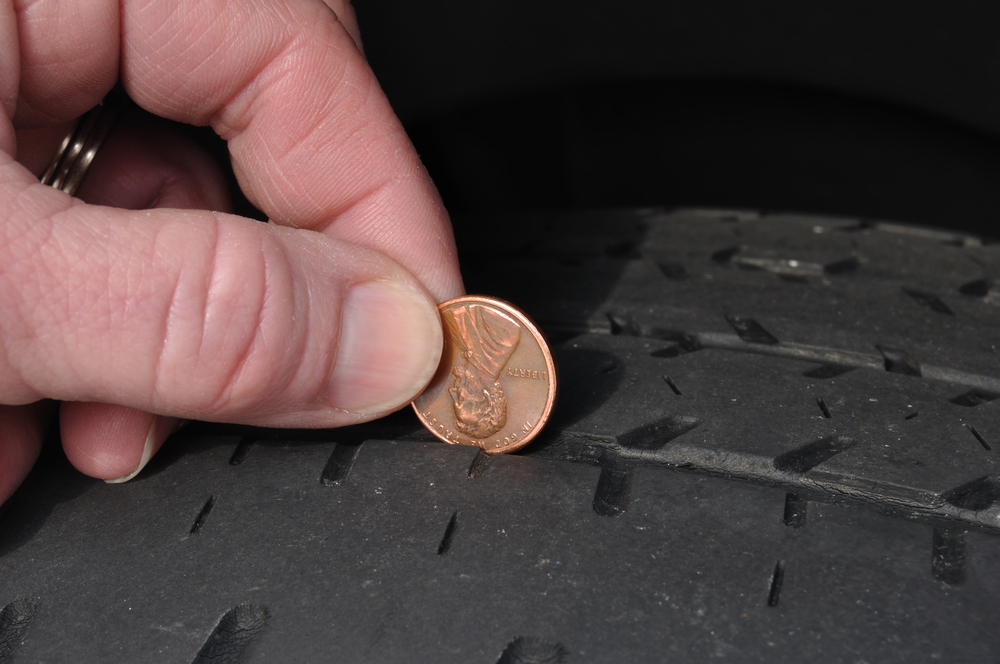
Use a standard U.S. penny with Lincoln’s head facing down. This method is widely used to check tire tread depth quickly.
2. Insert the Penny into the Tire Tread
Place the penny into the tread groove at several locations across the tire. Be sure to test different parts of the tire, as uneven wear may affect your results.
3. Check Lincoln’s Head
If you can see all of Lincoln’s head, your tread depth is too low, and it’s time for new tires. If the tread still covers part of Lincoln’s head, your tires have enough tread left.
4. Repeat for All Tires
Check each tire individually, as wear patterns can differ between them. If one tire is significantly more worn than the others, it could indicate alignment or suspension issues that need to be addressed.
Common Tire Requirements for Nissan SUVs
- Nissan Rogue: Typically uses 17″-19″ all-season tires, designed for a balance of comfort and traction.
- Nissan Pathfinder: Designed for larger 18″-20″ all-terrain tires, offering durability and superior grip on rough roads.
- Nissan Murano: Equipped with performance-oriented 18″-20″ tires for enhanced handling and stability.
- Nissan Altima: Uses fuel-efficient 16″-19″ tires to maximize smoothness and efficiency on highways.
When Should You Replace Your Tires?
Replacing your tires on time ensures the safety and performance of your Nissan. Here are key signs indicating it’s time for a replacement:
- Your tires fail the penny test.
- You experience poor traction in wet conditions.
- Your tires show signs of uneven wear or bulging.
- Your vehicle vibrates excessively while driving.
- Your tires are older than six years, regardless of tread depth.
- There are visible cracks on the tire sidewalls.
- Your TPMS (Tire Pressure Monitoring System) frequently signals pressure loss.
- Your tires make excessive road noise, indicating irregular wear.
- Handling feels less responsive, making steering more difficult.
Need a Tire Change? Follow This Step-by-Step Guide
If you need to replace a flat or worn-out tire, follow our step-by-step Nissan tire change guide for a smooth and safe process.
Explore Nissan Models with New Tires
Looking for a Nissan with top-tier tire performance? Check out our new Nissan inventory or explore our pre-owned vehicles to find a model that fits your needs. Our dealership offers a wide range of trims with advanced safety features, ensuring the best tire performance for every drive.
At Nissan of Athens, we are committed to providing high-quality service and genuine Nissan tires to keep your vehicle performing at its best. Whether you need a tire rotation, alignment, or a brand-new set of tires, our service center is here to help. Visit us today for expert tire care and exclusive tire specials.